Our activities
Where the Milky Way Dances with the Baobab
let's explore the cosmos together!
The Southern African Regional Office of Astronomy for Development (SAROAD) operates through a collaborative approach, working to coordinate astronomy-related activities that foster the goals of the IAU Strategic Plan 2020–2030 in the region. Our work is centered on using astronomy as a tool for societal development, education, and innovation.
outreach Programs
Empowering the next generation of explorers. Discover how SAROAD's astronomy outreach inspires students and advances scientific literacy for society.
astro-Tourism
Southern Africa’s celestial magic: stargazing safaris, desert astronomy & galactic vistas. Your cosmic adventure starts here!
Astronomy For Mental Health
How stargazing reduces stress & anxiety—discover astronomy’s therapeutic power to quiet the mind and reconnect with the universe.
Hack4Dev
Advancing the IAU’s vision: Harnessing astronomy to tackle poverty, inequality, and inspire the next generation of scientists.
Astro Lab
Step into the Astro Lab: A hub for processing celestial images, discovering asteroids, and conducting hands-on astronomical research.
Opportunities
Explore careers in astronomy, from research to outreach. Discover funding, internships, and how to turn your passion for the cosmos into a profession.
Our Impact: Transforming Lives Through Astronomy
Economic Empowerment and Rural Development
Capacity Development
Our Astrotourism flagship initiative leverages the region’s world-class dark skies to drive rural economic development.
• Local Income Generation: By supporting community observatories and astro-lodges, we create new income-generating opportunities in often-overlooked rural areas.
• Sustainable Growth: This initiative promotes sustainable eco-tourism and dark-sky preservation policies, ensuring that the natural beauty of the region remains an economic asset for generations to come
Building a High-Tech Workforce
Solving Tomorrow's Challenges: Coding, Data, and the DARA Effect
Through initiatives like DARA (Development in Africa with Radio Astronomy) and Hack4Dev, we are equipping the next generation with the skills needed to thrive in a global digital economy.
• Self-Sustaining Hubs: The DARA project aims to train a diverse generation of young people to lead self-sustaining space-sector hubs in their home countries.
• Versatile Skillsets: Participants gain high-tech expertise in coding, data science, and big data analysis—skills that are essential for strong, developed economies.
• Solving Real-World Problems: Through hackathons, students use astronomical datasets to address pressing societal challenges, such as climate data interpretation and AI applications
Scientific Literacy and Inspiration
Bridging Science and Society
Our outreach activities bridge the gap between science and society, fostering a culture of curiosity and innovation among students.
• Inspiring Future Leaders: Events like World Space Week and astronomy conferences encourage students to see themselves as future scientists, engineers, and innovators.
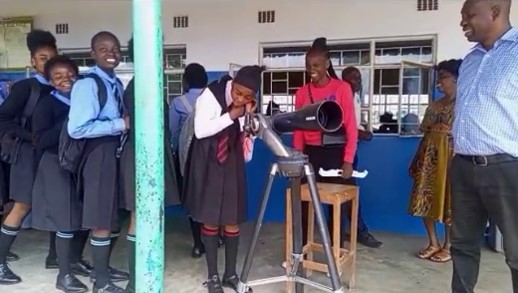
• Hands-on Education: By building their own telescopes (Galileoscopes) and engaging in real-time celestial navigation, students gain scientific literacy that is often missing from conventional curricula.
• Unity and Collaboration: These programs foster networking between academia and the public, promoting a sense of community and scientific ownership
get to know more
Ask Us Anything
Astronomy for Development is an International Astronomical Union (IAU) initiative that uses the scientific, technological, and cultural benefits of astronomy to drive societal progress.
For Southern Africa, this translates to:
• Regional Coordination: SAROAD (based in Zambia) coordinates 11+ countries to implement the IAU’s strategic goals.
• Infrastructure Advantage: Leveraging world-class facilities like SALT, MeerKAT, HESS, and the Square Kilometre Array (SKA) for regional benefit.
• Economic & Skill Growth: Boosting rural economies through Astrotourism and equipping youth with high-tech data science skills via DARA and Hack4Dev.
• Societal Well-being: Improving mental health and STEM literacy through community outreach and the “cosmic perspective”.
Southern Africa is a critical region for astronomy due to several key factors:
• Natural Advantages: The region possesses some of the darkest and clearest skies in the world, making it a global leader for optical astronomy and astrotourism.
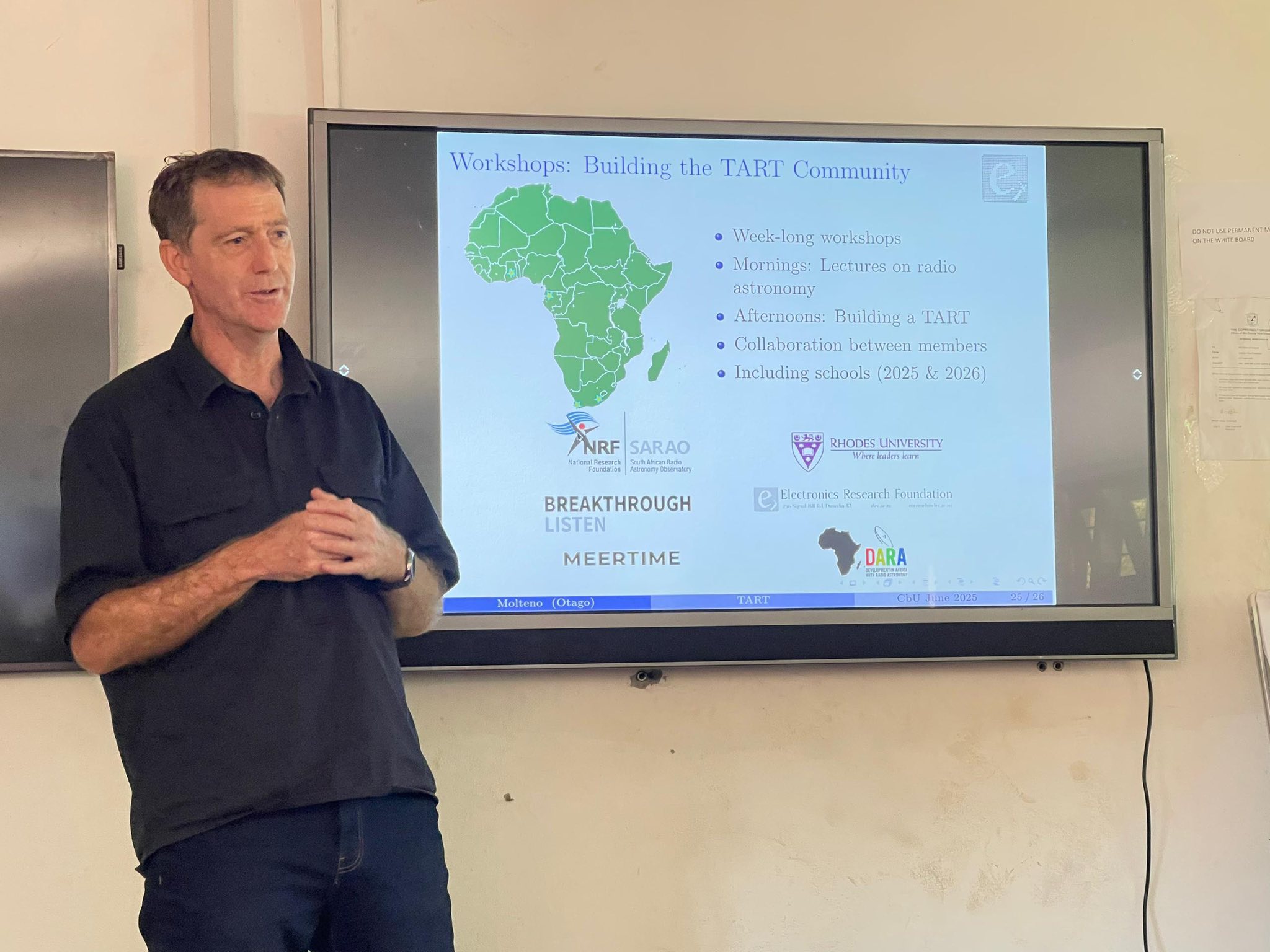
• World-Class Infrastructure: It hosts premier facilities across multiple wavelengths, including SALT (optical), MeerKAT (radio), HESS (gamma-ray), and the Square Kilometre Array (SKA). Ongoing projects like the Africa Very Long Baseline Interferometry Network (AVN) and Transient Array Radio Telescope (TART) further expand this capacity.
• Strategic Hubs: The region is home to the global IAU Office of Astronomy for Development (OAD) in South Africa and the SAROAD regional node in Zambia, which coordinates activities for over 11 countries.
• Human Capital: A large young population provides a vital talent pool for training programs like DARA and PAP2SN, which build high-tech skills in data science and radio astronomy.
• Government Support: There is significant goodwill from regional governments to support space science and human capital development.
SAROAD can help you bring astronomy into the classroom through several educational and outreach initiatives:
• Teacher Training & Expert Support: You can participate in capacity-building programs such as the Galileo Teacher Training Programme (GTTP) and NASE, or request expert visits and guest lectures to inspire your students.
• Hands-on Workshops: SAROAD facilitates Galileoscope Assembly Workshops, where students build their own telescopes, and provides tools for solar viewing and night-sky observation.
• Interactive Digital Tools: Educators are encouraged to use software like Stellarium and Celestia for real-time celestial navigation and cosmic simulations.
• Global Events: You can engage your class in World Space Week through science exhibitions, presentations, and debate competitions.
• Skills & Innovation: For older students, initiatives like Hack4Dev and DARA introduce coding, Python, and data science using real astronomical datasets.
• Strategic Guidance: SAROAD acts as a “first port of call” for advice, guidance, and information on astronomy-based educational resources in the region.
Studying the stars drives practical development by acting as a gateway to high-tech skills and local economic opportunities:
• Technological Growth: Radio astronomy encompasses the STEM skills necessary for a developed economy. Large-scale projects like the Square Kilometre Array (SKA) foster advanced technological developments, while programs like DARA and Hack4Dev train youth in big data analysis, Python, AI, and signal processing—skills applicable to challenges like satellite sensing and climate data.
• Job Creation: The Astrotourism flagship initiative creates immediate income in rural areas by training local youth as astro-guides and supporting community-owned star-gazing events and astro-lodges.
• Industrial Hubs: Efforts like the DARA project aim to establish self-sustaining space-sector hubs, ensuring African nations have the high-level personnel required to lead their own scientific and technological industries.
SAROAD facilitates funding and support for community projects through several channels:
• OAD Grants: We assist the global IAU OAD in reviewing, monitoring, and evaluating project proposals submitted through their annual call for funding.
• Fundraising and Resource Mobilization: We proactively initiate fundraising efforts for regional development and assist partners in acquiring necessary infrastructure and financial resources.
• Technical and Strategic Support: SAROAD provides strategic advice, guidance, and information to individuals and organizations. We also assist in sourcing partners or volunteers to help implement projects.
• Training Opportunities: We promote access to elite programs like DARA, which offers fellowships and high-tech training, and PAP2SN, which provides academic mobility and research collaboration.
Yes, your company or organization can partner with SAROAD. The office operates through a collaborative approach and actively seeks to source partners to facilitate regional development activities and project implementation. Current partners include government ministries, universities, and international programs like DARA and PAPSSN.
Benefits of partnering with SAROAD include:
• Strategic Advice & Guidance: SAROAD acts as the “first port of call” for individuals and organizations involved in astronomy-based development, providing expert guidance and regional contacts.
• Access to High-Tech Human Capital: Partners can leverage a growing talent pool of youth trained in big data, coding, Python, and signal processing through elite training programs.
• Infrastructure & Research Collaboration: Partnership offers opportunities to align with world-class astronomical infrastructure, including the Square Kilometre Array (SKA), SALT, and MeerKAT.
• Regional Reach: Your organization gains access to a coordinated network spanning 11+ country nodes across Southern Africa.
• Socio-Economic Impact: Partners can contribute to and benefit from high-impact flagship initiatives like Astrotourism, which drives rural economic development, and Astro 4 Skills, which fosters technological innovation.
• Resource Mobilization: SAROAD proactively assists partners in sourcing funding and infrastructure for regional development projects.
As a student in Southern Africa, you can access several high-tech training and educational opportunities coordinated through SAROAD and its partners:
• DARA (Development in Africa with Radio Astronomy): Offers basic and advanced training, as well as postdoc fellowships, in high-tech skills such as radio interferometry, big data analysis, and Python.
• PAP2SN (Pan African Planetary and Space Science Network): Provides academic mobility, joint research supervision, and specialized workshops in planetary and space science.
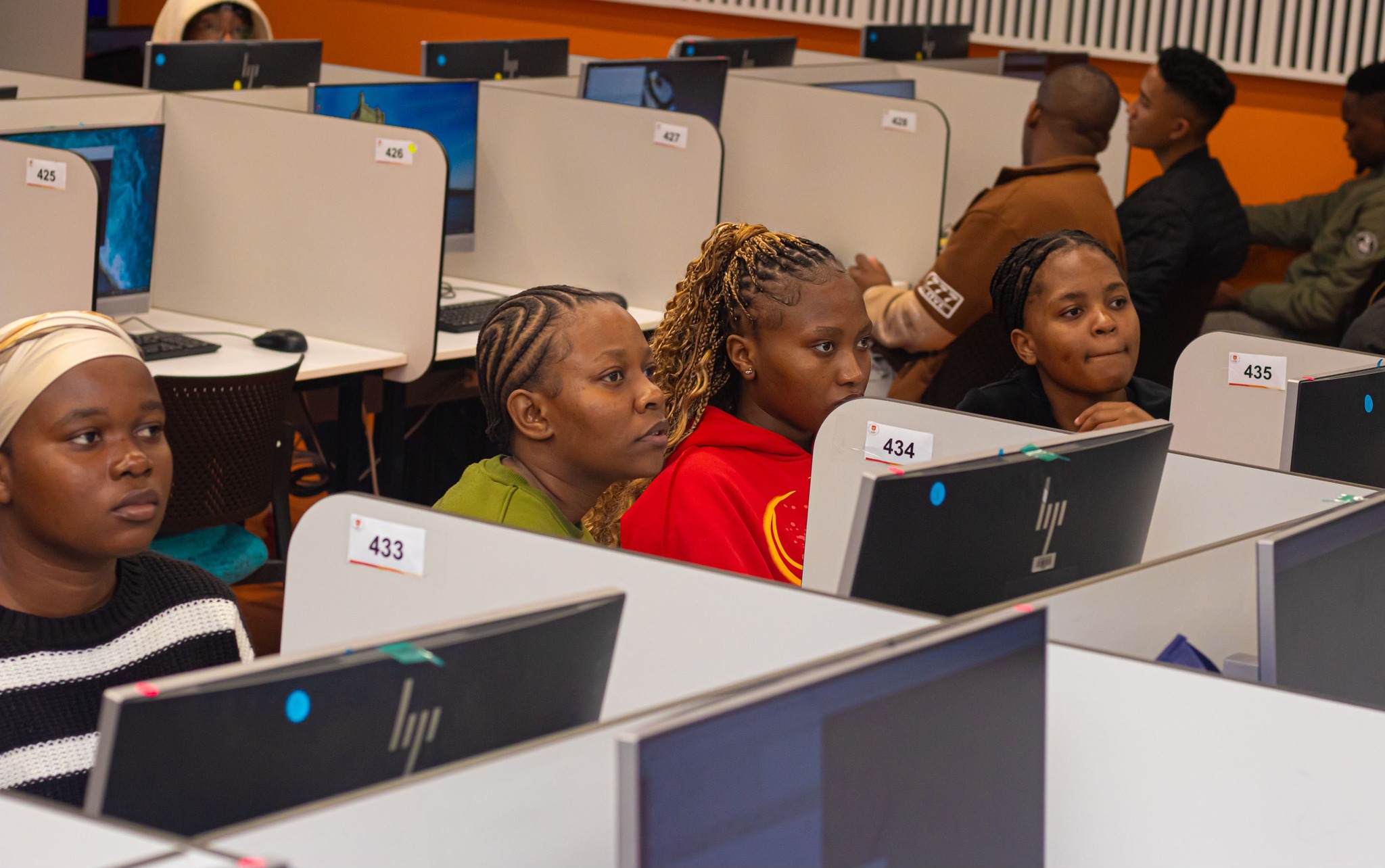
• Hack4Dev / Hack4Skill: Innovation-driven programs that teach coding, data science, and AI using real astronomical datasets to solve real-world challenges.
• Outreach and Competitions: Opportunities to participate in World Space Week science presentations and debate competitions, as well as hands-on Galileoscope building workshops.
• Technical Training: Practical training is available through the installation of the TART (Transient Array Radio Telescope) and existing programs like NASSP and AIMS.
• Volunteering: You can join a regional network of volunteers to support astronomy development and education in your country node.
To get involved as a volunteer with SAROAD, you should contact the Regional Office at Copperbelt University or reach out directly to your local Country Coordinator. Each country node is responsible for maintaining a registry of volunteers and identifying local opportunities for engagement.
Skills Needed:
• Scientific & Technical Expertise: Backgrounds in astrophysics, physics, radio astronomy, and data science are highly valued for assisting with research schools and technical training.
• Education & Communication: Skills in teaching and science communication are needed to conduct expert visits, guest lectures, and teacher training workshops.
• Data & Innovation: Proficiency in Python, big data analysis, and signal processing is essential for supporting innovation-driven programs like Hack4Dev.
• Community Engagement: Both professional and amateur astronomers are encouraged to volunteer their time for public outreach, night-sky observations, and community development projects.
• Leadership: Dedicated individuals may serve as voluntary Country Coordinators to manage and coordinate astronomy-related activities within their respective nation